Introduction
Multiple myeloma is a blood cancer that develops in plasma cells, a type of white blood cell found in bone marrow. Abnormal plasma cells can interfere with normal blood production, weaken bones, damage the kidneys, and reduce the body’s ability to fight infections. Treatment may involve chemotherapy, targeted medications, immunotherapy, stem cell transplantation, CAR T-cell therapy, and supportive hospital care.
Understanding multiple myeloma treatment costs in the USA in 2027 is important for patients and families comparing advanced cancer therapies, stem cell transplant expenses, oncology medication prices, and hospital bills.
The total expense depends on the cancer’s stage, treatment history, medication selection, insurance benefits, and the patient’s overall health. Some patients receive outpatient drug combinations, while others require hospitalization for transplantation or advanced cellular therapy.
This comprehensive guide examines estimated American multiple myeloma treatment expenses for 2027, including diagnosis, CAR T-cell therapy, autologous stem cell transplantation, hospital services, insurance coverage, and long-term financial planning.
What Is Multiple Myeloma?
Multiple myeloma occurs when abnormal plasma cells multiply within the bone marrow. These cells can produce abnormal antibodies or antibody fragments and interfere with normal bone marrow function.
The disease may cause anemia, bone lesions, elevated calcium levels, kidney problems, and recurrent infections.
Multiple myeloma is generally considered treatable but not routinely curable. However, modern therapies can produce deep responses and prolonged periods of disease control in many patients.
Treatment selection depends on disease characteristics, previous therapies, transplant eligibility, and individual medical needs.
Common Symptoms of Multiple Myeloma
- Persistent back pain or bone pain.
- Unexplained fatigue and weakness.
- Frequent infections.
- Unintentional weight loss.
- Bone fractures.
- Kidney dysfunction.
- High blood calcium levels.
- Numbness or neurological symptoms in selected cases.
These symptoms may occur with other conditions. Persistent bone pain, unexplained anemia, or abnormal kidney tests should be evaluated by a healthcare professional.
How Is Multiple Myeloma Diagnosed?
Blood Tests
Blood tests may identify abnormal proteins, anemia, kidney dysfunction, elevated calcium, and changes in free light chains.
Urine Tests
Urine testing can help detect abnormal proteins produced by malignant plasma cells.
Bone Marrow Biopsy
A bone marrow biopsy measures plasma cell involvement and provides tissue for additional testing.
Genetic and Cytogenetic Testing
Specialized tests help identify genetic abnormalities that may influence prognosis and treatment planning.
Imaging Studies
Whole-body low-dose CT, PET/CT, MRI, or other appropriate imaging may identify bone damage and disease involvement.
Multiple Myeloma Treatment Options
Combination Drug Therapy
Many patients receive combinations of medications targeting cancer cells through different mechanisms.
Common treatment classes include proteasome inhibitors, immunomodulatory drugs, corticosteroids, and monoclonal antibodies.
Examples include bortezomib, lenalidomide, dexamethasone, and daratumumab.
The specific combination depends on transplant eligibility, disease characteristics, prior treatment, and other medical conditions.
Autologous Stem Cell Transplantation
Autologous stem cell transplantation uses the patient’s own previously collected blood-forming stem cells.
Patients typically receive high-dose chemotherapy, often melphalan, followed by infusion of their collected stem cells to restore blood production.
This treatment can deepen disease response and extend remission, but it is not generally considered a guaranteed cure.
CAR T-Cell Therapy
Chimeric antigen receptor T-cell therapy, commonly called CAR T-cell therapy, is an advanced treatment that modifies a patient’s immune cells to recognize and attack cancer cells.
Approved BCMA-directed CAR T-cell products for multiple myeloma include idecabtagene vicleucel, marketed as Abecma, and ciltacabtagene autoleucel, marketed as Carvykti.
Eligibility depends on the product’s current approved indication, previous treatment history, and patient-specific factors.
CAR T-cell therapy requires specialized treatment centers and monitoring for serious complications, including cytokine release syndrome and neurological toxicity.
Bispecific Antibody Therapy
Bispecific antibodies help immune cells recognize and attack myeloma cells.
Examples include teclistamab, elranatamab, and talquetamab, although approved indications and treatment requirements differ.
Some treatments require close observation during initial doses because of possible immune-related complications.
Radiation Therapy
Radiation may be used for selected painful bone lesions, localized disease, or urgent complications involving nearby structures.
Supportive Care
Supportive treatment may include bone-strengthening medications, infection prevention, pain management, transfusions, and treatment of kidney or calcium abnormalities.
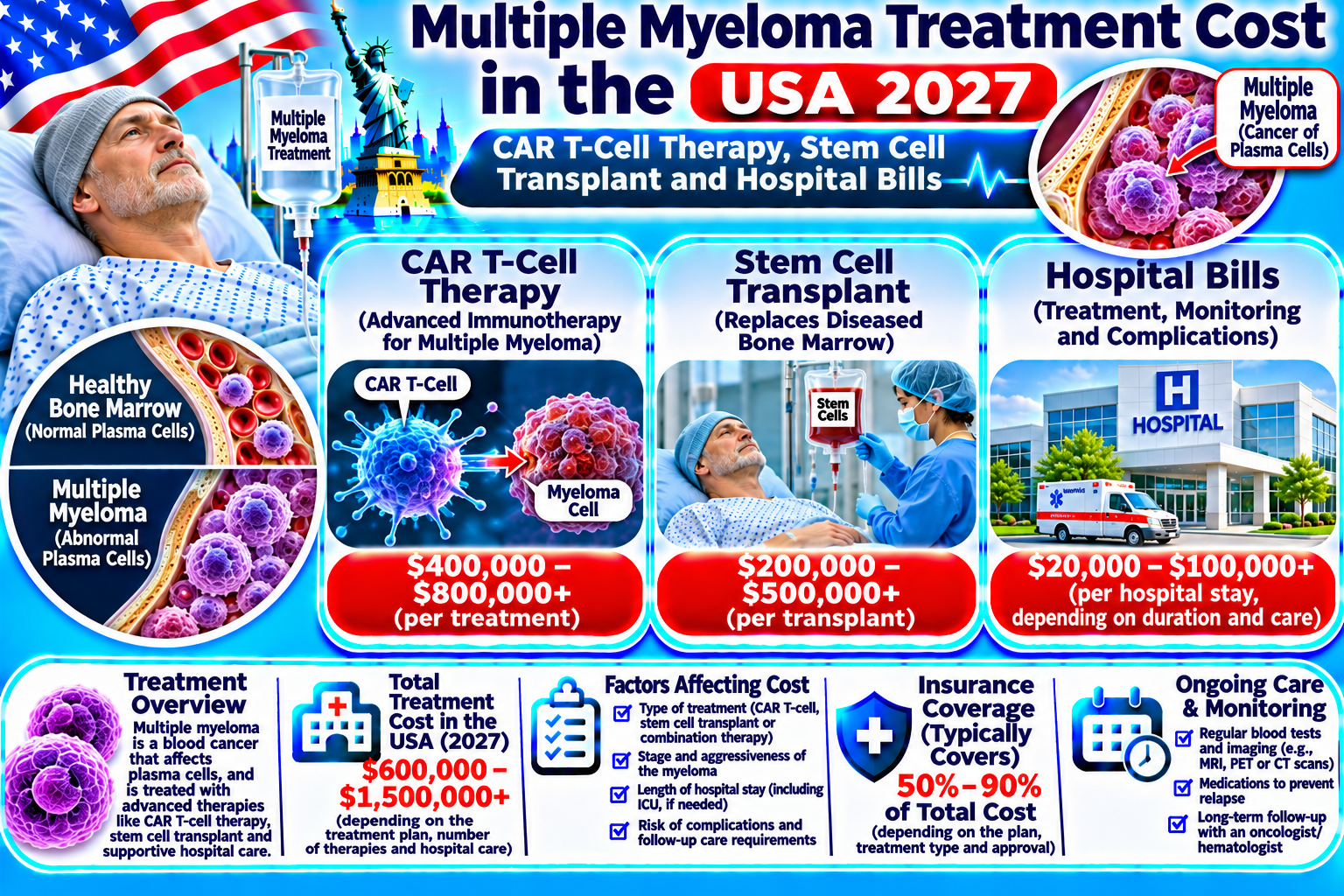
Multiple Myeloma Treatment Cost in the USA in 2027
Multiple myeloma treatment expenses vary significantly across American cancer centers, hospitals, pharmacies, and insurance arrangements.
Advanced cellular therapies can involve especially high upfront expenses, while ongoing medication combinations may generate substantial costs over months or years.
The following figures are illustrative 2027 budgeting estimates rather than verified national averages, guaranteed hospital quotations, or patient out-of-pocket payments.
Estimated USA Cost Breakdown
| Treatment or Service | Estimated Cost (USD) |
|---|---|
| Hematologist or Oncologist Consultation | $200–$800+ |
| Blood and Urine Testing | $200–$2,000+ |
| Bone Marrow Biopsy Episode | $2,000–$8,000+ |
| PET/CT or Advanced Imaging | $2,000–$7,000+ |
| Combination Drug Therapy | $5,000–$30,000+ per month, depending on regimen |
| Autologous Stem Cell Transplant Episode | $100,000–$250,000+ |
| CAR T-Cell Product | Approximately $420,000–$500,000+ based on historical product list prices |
| Complete CAR T-Cell Treatment Episode | $500,000–$900,000+ |
| Bispecific Antibody Therapy | $15,000–$40,000+ per month, illustrative gross cost |
| Radiation Therapy Course | $5,000–$30,000+ |
| Hospital Admission for Complications | $10,000–$60,000+ |
| Intensive Care Hospitalization | $30,000–$150,000+ |
| Oncology Follow-Up Appointment | $150–$600+ |
Important: These are broad hypothetical planning figures. CAR T-cell treatment episode estimates may already include the cellular product, hospital services, and certain professional fees. Do not add the product price to the complete episode estimate without checking for duplicate charges. Historical product list prices are not confirmed 2027 prices.
USA Multiple Myeloma Treatment Cost Comparison
Because this article focuses on the United States, the following table compares American treatment scenarios rather than different countries.
| USA Treatment Scenario | Illustrative Budget |
|---|---|
| Six Months of Combination Drug Therapy | $30,000–$180,000+ |
| Autologous Stem Cell Transplant Episode | $100,000–$250,000+ |
| CAR T-Cell Treatment Episode | $500,000–$900,000+ |
| Six Months of Bispecific Antibody Therapy | $90,000–$240,000+ |
| Complex Treatment With Repeated Hospitalization | $200,000–$500,000+ |
These are illustrative treatment scenarios, not standardized medical packages. Actual expenses depend on the treatment sequence, response, complications, and insurance coverage.
CAR T-Cell Therapy Costs for Multiple Myeloma
CAR T-cell therapy is among the most expensive treatment options for multiple myeloma because each dose is manufactured using the patient’s own immune cells.
The process involves several stages, including T-cell collection, specialized laboratory manufacturing, preparatory chemotherapy, cell infusion, and medical monitoring.
Historical published prices for Abecma and Carvykti have ranged from approximately $420,000 to more than $500,000 for the cellular product alone, depending on the product, year, and pricing measure.
These prices do not represent confirmed 2027 rates. They also exclude many costs associated with hospitalization, laboratory testing, medication administration, and treatment complications.
What Is Included in a CAR T-Cell Treatment Bill?
- Initial specialist evaluation and eligibility testing.
- Collection of the patient’s T cells.
- Cell manufacturing and transportation.
- Bridging therapy when medically necessary.
- Lymphodepleting chemotherapy.
- CAR T-cell product and infusion.
- Hospital observation or inpatient treatment.
- Management of treatment complications.
- Follow-up testing and long-term monitoring.
CAR T-cell therapy can cause cytokine release syndrome, neurological toxicity, infections, and prolonged low blood counts. Managing these complications may require hospitalization or intensive care.
Patients should request a complete treatment episode estimate rather than relying only on the cellular product price.
Stem Cell Transplant Cost for Multiple Myeloma
Autologous stem cell transplantation remains an important treatment option for eligible patients with multiple myeloma.
The process usually begins with collecting blood-forming stem cells from the patient. These cells are frozen and stored until the patient receives high-dose chemotherapy.
The stored stem cells are then returned to support recovery of normal blood production.
Transplant-related expenses may include stem cell mobilization, collection, processing, storage, chemotherapy, hospital services, transfusions, and infection management.
Some patients undergo transplantation in an inpatient setting, while carefully selected individuals may receive substantial portions of care as outpatients.
The overall cost depends on complications, hospitalization length, and the services included in the transplant package.
CAR T-Cell Therapy vs Stem Cell Transplant Costs
CAR T-cell therapy and autologous stem cell transplantation differ in their medical purpose, timing, eligibility, and financial requirements.
Autologous transplantation commonly follows initial treatment in eligible patients, while CAR T-cell therapy is generally used according to specific indications for relapsed or refractory disease.
CAR T-cell therapy usually has a higher upfront product cost because the immune cells undergo specialized genetic modification and manufacturing.
Stem cell transplantation involves high-dose chemotherapy and significant supportive care, but it does not require purchasing a genetically engineered CAR T-cell product.
Neither approach should be selected solely on the basis of price. Clinical effectiveness, risks, previous treatment, and specialist recommendations are more important considerations.
Hospital Bills and Intensive Care Expenses
Hospital expenses are an important component of advanced multiple myeloma treatment.
Patients undergoing transplantation or cellular therapy may require specialized nursing, frequent laboratory testing, infection monitoring, blood transfusions, and intravenous medications.
Common hospital charges include:
- Inpatient accommodation and nursing care.
- Hematology and oncology specialist services.
- Blood and platelet transfusions.
- Intravenous antibiotics and supportive medications.
- Diagnostic imaging and laboratory testing.
- Management of chemotherapy complications.
- Intensive care when medically necessary.
Hospital bills may increase significantly when patients develop serious infections, prolonged low blood counts, or immune-related complications.
Multiple Myeloma Medication Expenses
Many patients receive combination medication regimens before or after advanced treatments.
Some medications are administered in outpatient infusion centers, while others are taken orally at home.
Drug costs depend on the specific regimen, dosing schedule, treatment duration, and insurance contracts.
Patients may also require maintenance therapy after transplantation to help prolong disease control.
Medication expenses can accumulate over time, particularly when treatment continues for several years.
Multiple Myeloma Treatment With Health Insurance
Many comprehensive American health insurance plans cover medically necessary multiple myeloma treatment, including eligible chemotherapy, specialty medications, stem cell transplantation, and CAR T-cell therapy.
However, coverage depends on the patient’s policy, diagnosis, prior treatments, and the specific therapy requested.
Important insurance considerations include:
- Annual deductible and out-of-pocket maximum.
- Oncologist and hospital network participation.
- Prior authorization for advanced therapies.
- Coverage for CAR T-cell products and administration.
- Stem cell collection and transplant benefits.
- Prescription medication formulary requirements.
- Hospital admission and intensive care coverage.
- Follow-up testing and complication management.
Insurance approval does not necessarily eliminate personal expenses. Deductibles, copayments, and coinsurance may still apply.
Medicare Coverage for Multiple Myeloma
Original Medicare may cover medically necessary multiple myeloma treatment for eligible beneficiaries when applicable requirements are satisfied.
Medicare Part A generally covers qualifying inpatient hospital services, while Part B covers eligible physician services and many outpatient cancer treatments.
Medicare Part D may cover qualifying outpatient prescription medications.
Autologous stem cell transplantation for eligible multiple myeloma patients may be covered under applicable Medicare policies.
CAR T-cell therapy coverage depends on relevant Medicare requirements, approved indications, and treatment setting.
Medicare Advantage plans may have different provider networks, prior authorization requirements, and cost-sharing arrangements.
Medicaid and Financial Assistance
Medicaid may cover medically necessary multiple myeloma treatment for eligible individuals, depending on state-specific rules and benefits.
Some cancer centers provide financial assistance, while oncology social workers and financial navigators may help patients identify support programs.
Manufacturer assistance programs may be available for certain medications, subject to eligibility restrictions.
Patients should verify assistance requirements before assuming that a program will cover treatment expenses.
Multiple Myeloma Treatment Without Insurance
Uninsured patients may face substantial expenses for medications, transplantation, cellular therapy, and hospitalization.
Before planned treatment, patients should request written estimates explaining which services are included.
Patients should ask whether specialist fees, laboratory tests, medication administration, hospital accommodation, and follow-up appointments will be billed separately.
Factors Influencing Multiple Myeloma Treatment Prices
1. Disease Stage and Risk
Higher-risk disease or repeated relapse may require more complex treatment and additional monitoring.
2. Treatment Selection
Drug combinations, autologous transplantation, bispecific antibodies, and CAR T-cell therapy have substantially different costs.
3. Hospital and Specialist Fees
Transplant center resources, oncology consultations, inpatient care, and intensive monitoring influence medical spending.
4. Medication Prices
Specialty drug selection, dosing schedules, and treatment duration can significantly affect expenses.
5. Insurance Coverage
Deductibles, negotiated rates, provider networks, and authorization requirements determine much of the patient’s financial responsibility.
6. Geographic Location
Healthcare prices vary across American states and cities because of regional operating costs and insurance arrangements.
7. Complications and Readmissions
Infections, low blood counts, kidney complications, and immune-related side effects can increase hospitalization expenses.
Recovery After Stem Cell Transplantation
Recovery following autologous transplantation involves rebuilding blood counts and monitoring for infection, fatigue, and other treatment-related complications.
Some patients require additional transfusions, antibiotics, nutritional support, or hospital treatment during recovery.
Follow-up visits and laboratory monitoring continue after discharge.
Recovery After CAR T-Cell Therapy
Patients receiving CAR T-cell therapy require close monitoring for early and delayed complications.
Some patients experience prolonged low blood counts or infections and may need additional medical support.
Specialist teams provide individualized instructions about follow-up appointments, activity restrictions, infection prevention, and emergency symptoms.
Long-Term Follow-Up Expenses
Multiple myeloma often requires long-term monitoring even after a strong treatment response.
Follow-up care may include:
- Regular hematologist appointments.
- Blood and urine protein testing.
- Kidney function and calcium monitoring.
- Bone health assessment.
- Imaging when clinically indicated.
- Maintenance medications.
- Monitoring for relapse and treatment complications.
Patients should also consider transportation, temporary accommodation near specialist centers, caregiver expenses, and time away from employment.
How to Reduce Multiple Myeloma Treatment Costs
- Verify insurance benefits before advanced treatment.
- Request complete written hospital estimates.
- Confirm cancer specialists and transplant centers are in-network.
- Review prescription medication coverage.
- Ask about hospital financial assistance programs.
- Explore appropriate clinical trial opportunities.
- Discuss Medicare and Medicaid eligibility.
- Work with an oncology financial navigator.
Patients should prioritize medically appropriate treatment and specialist expertise rather than choosing therapies solely because of their price.
Frequently Asked Questions
How much does multiple myeloma treatment cost in the USA in 2027?
Illustrative expenses range from several thousand dollars per month for selected medication regimens to hundreds of thousands of dollars for advanced cellular therapy.
How much does CAR T-cell therapy cost?
Historical cellular product prices have exceeded $400,000. Illustrative complete treatment episode expenses may reach $500,000 to $900,000 or more.
How much does a stem cell transplant cost?
Illustrative autologous transplant episode expenses may range from approximately $100,000 to $250,000 or more, depending on hospitalization and complications.
Does insurance cover CAR T-cell therapy?
Many comprehensive insurance plans may cover qualifying medically necessary CAR T-cell therapy, subject to approved indications, authorization, and policy requirements.
Does Medicare cover stem cell transplantation?
Medicare may cover qualifying autologous stem cell transplantation for eligible patients with multiple myeloma under applicable coverage requirements.
Is CAR T-cell therapy a cure for multiple myeloma?
CAR T-cell therapy can produce deep and sometimes prolonged responses, but relapse remains possible and it is not considered a guaranteed cure.
Do all multiple myeloma patients need a transplant?
No. Treatment depends on age, general health, disease characteristics, patient preferences, and specialist recommendations.
Conclusion
Multiple myeloma treatment costs in the USA in 2027 depend on CAR T-cell therapy, stem cell transplantation, specialty medications, hospital bills, complications, and insurance coverage.
Patients should compare complete treatment estimates, verify insurance benefits, and consult experienced hematology and oncology specialists before making medical decisions.
Appropriate treatment selection, coordinated care, consistent monitoring, and careful financial planning can help patients manage the expenses associated with this complex blood cancer.
Medical Disclaimer: This article provides general educational and financial planning information only. It does not replace professional medical advice, diagnosis, or treatment. All 2027 cost ranges are illustrative estimates, while referenced CAR T-cell product prices reflect historical published figures. Actual charges and insurance payments should be verified directly with hospitals, specialists, pharmacies, and insurers.
