Introduction
Sickle cell disease is an inherited blood disorder that affects the shape and function of red blood cells. It can cause severe pain episodes, chronic anemia, infections, organ damage, and other serious health complications. Treatment may involve medications, blood transfusions, hospitalization, stem cell transplantation, or advanced gene therapy.
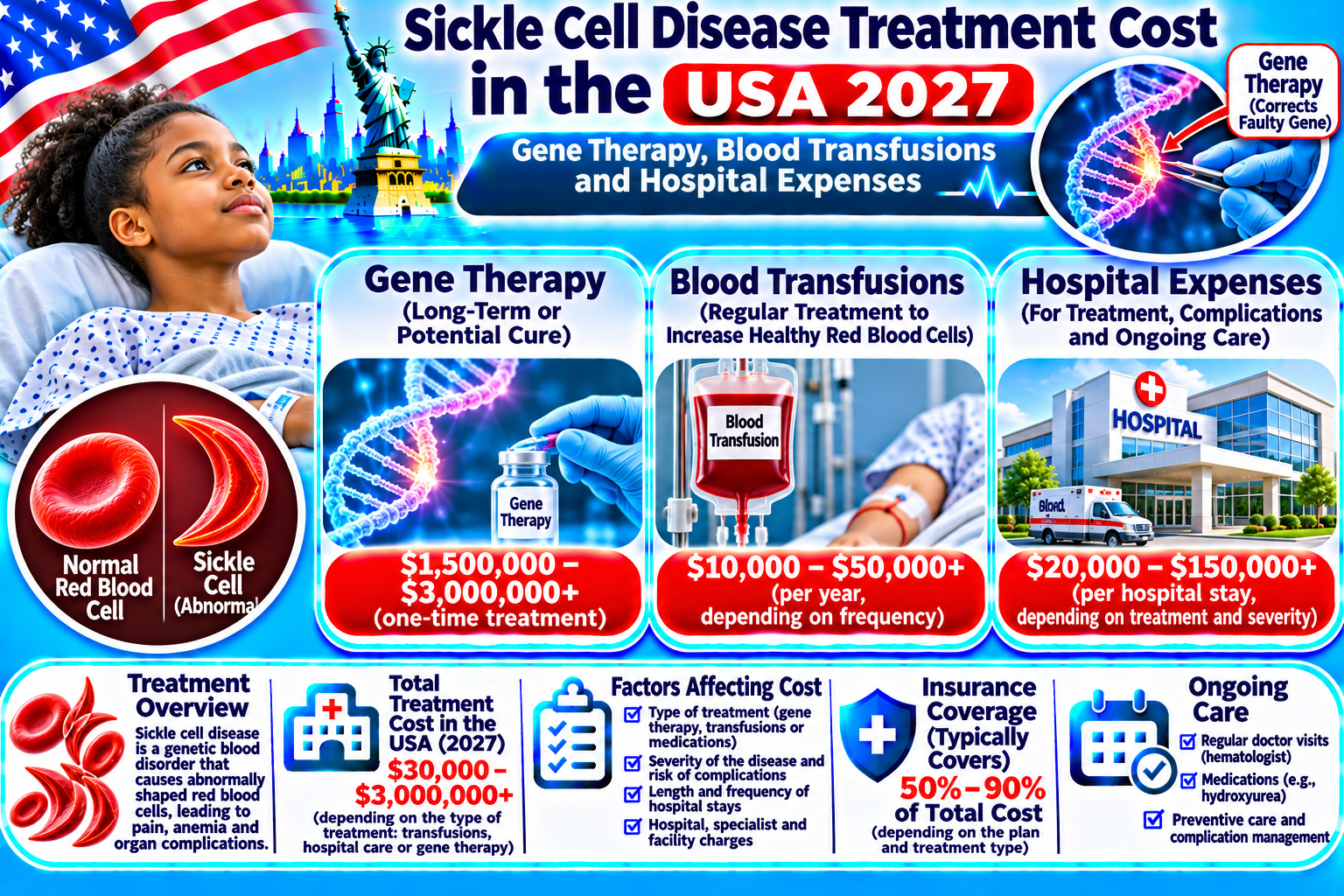
Understanding sickle cell disease treatment costs in the USA in 2027 is important for patients and families comparing gene therapy prices, blood transfusion expenses, hematologist fees, emergency hospital bills, and health insurance coverage.
Medical expenses vary according to disease severity, treatment frequency, complications, hospital location, and insurance benefits. Some patients manage their condition through regular outpatient care, while others require repeated hospital admissions or specialized procedures.
This comprehensive guide examines estimated American sickle cell treatment expenses for 2027, including diagnosis, medications, transfusions, gene therapy, hospital services, and financial assistance.
What Is Sickle Cell Disease?
Sickle cell disease, commonly abbreviated as SCD, is a group of inherited disorders affecting hemoglobin, the protein that carries oxygen inside red blood cells.
Abnormal hemoglobin can cause red blood cells to become rigid and crescent-shaped. These cells may break down prematurely and obstruct blood flow through small vessels.
Restricted circulation can trigger painful vaso-occlusive crises and contribute to damage involving the lungs, kidneys, brain, bones, and other organs.
Sickle cell disease is a lifelong condition, but modern medical treatments can reduce complications and improve quality of life.
Types of Sickle Cell Disease
Hemoglobin SS Disease
Hemoglobin SS, commonly called sickle cell anemia, is often associated with significant anemia and recurrent complications.
Hemoglobin SC Disease
Hemoglobin SC disease may produce a different pattern of symptoms and complications. Severity varies between patients.
Hemoglobin S Beta-Thalassemia
This condition occurs when a person inherits a sickle hemoglobin gene and a beta-thalassemia gene. Clinical severity depends partly on the specific genetic variant.
Common Symptoms and Complications
- Recurring episodes of severe pain.
- Chronic fatigue and anemia.
- Swelling of the hands and feet.
- Frequent or serious infections.
- Delayed growth in some children.
- Shortness of breath.
- Jaundice or yellowing of the eyes.
- Kidney, lung, or neurological complications.
Acute chest syndrome, stroke symptoms, high fever, or severe breathing difficulties require emergency medical evaluation.
How Is Sickle Cell Disease Diagnosed?
Sickle cell disease is diagnosed using blood tests that identify abnormal hemoglobin patterns.
Newborn Screening
Newborn screening programs in the United States routinely test infants for sickle cell disease and certain other inherited conditions.
Hemoglobin Testing
Hemoglobin electrophoresis or related laboratory methods help identify specific hemoglobin variants.
Genetic Testing
Genetic testing may help clarify the diagnosis, support family counseling, or determine eligibility for specialized treatments.
Additional Medical Evaluation
Patients may need blood counts, kidney function tests, imaging, and other investigations to evaluate complications.
Sickle Cell Disease Treatment Options
Hydroxyurea
Hydroxyurea is an established medication that can reduce painful crises and certain complications in appropriate patients.
It increases fetal hemoglobin production and may reduce the tendency of red blood cells to sickle.
Regular laboratory monitoring is required during treatment.
L-Glutamine
Prescription L-glutamine may reduce certain sickle cell complications in eligible patients. Treatment selection depends on age, medical history, and clinician recommendations.
Blood Transfusions
Blood transfusions provide healthy donor red blood cells and may be used for severe anemia, stroke prevention, acute chest syndrome, or other complications.
Some patients require periodic transfusions over an extended period.
Red Blood Cell Exchange
Red cell exchange removes a portion of the patient’s sickled red blood cells and replaces them with donor cells.
This specialized procedure may be used in selected urgent or preventive treatment situations.
Stem Cell Transplantation
Allogeneic hematopoietic stem cell transplantation can potentially cure sickle cell disease in selected patients.
However, it requires an appropriate donor and carries risks such as infection, graft-versus-host disease, and graft failure.
Gene Therapy
Gene therapy uses the patient’s own blood-forming stem cells, which are collected and genetically modified before being returned following conditioning chemotherapy.
Two important FDA-approved treatments are Casgevy and Lyfgenia.
Casgevy uses CRISPR-based gene editing to increase fetal hemoglobin. Lyfgenia uses a gene-addition approach to produce modified hemoglobin.
As of 2026, Casgevy is approved for eligible patients aged two years and older with sickle cell disease and recurrent vaso-occlusive crises. Lyfgenia is approved for patients aged 12 years and older with sickle cell disease and a history of vaso-occlusive events.
Both treatments require specialized centers, intensive preparation, and long-term monitoring. They are not appropriate for every patient.
Sickle Cell Disease Treatment Cost in the USA in 2027
Sickle cell treatment expenses differ substantially between routine outpatient care, recurring hospital treatment, blood transfusion programs, and gene therapy.
The following figures are illustrative 2027 planning estimates rather than verified national averages or guaranteed medical quotations.
Estimated USA Cost Breakdown
| Treatment or Service | Estimated Cost (USD) |
|---|---|
| Hematologist Consultation | $200–$700+ |
| Blood Tests and Hemoglobin Evaluation | $100–$1,000+ |
| Generic Hydroxyurea | $20–$200+ per month |
| Prescription L-Glutamine | $1,000–$3,000+ per month |
| Outpatient Blood Transfusion Visit | $1,000–$5,000+ |
| Red Blood Cell Exchange Procedure | $3,000–$12,000+ |
| Emergency Department Visit | $1,000–$5,000+ |
| Hospital Admission for Pain Crisis | $8,000–$35,000+ |
| Allogeneic Stem Cell Transplant Episode | $200,000–$500,000+ |
| Casgevy Gene Therapy Product | $2.2 million historical launch list price |
| Lyfgenia Gene Therapy Product | $3.1 million historical launch list price |
Important: These figures mix hypothetical 2027 service estimates with published historical gene therapy launch prices, clearly identified above. The gene therapy product prices exclude many associated hospital and treatment expenses. They are not verified 2027 prices or patient out-of-pocket amounts.
USA Sickle Cell Treatment Cost Comparison
Because this article focuses on the United States, the following table compares different American treatment scenarios rather than international countries.
| USA Treatment Scenario | Estimated Budget |
|---|---|
| Routine Outpatient Care, Annual | $2,000–$12,000+ |
| Regular Transfusion Program, Annual | $15,000–$80,000+ |
| Frequent Hospital Admissions, Annual | $40,000–$150,000+ |
| Allogeneic Stem Cell Transplant Episode | $200,000–$500,000+ |
| Gene Therapy Treatment Pathway | Over $2 million in product costs alone, plus additional care |
These are not standardized packages. Individual expenses may be substantially higher or lower depending on disease severity, insurance arrangements, and treatment requirements.
Gene Therapy Costs for Sickle Cell Disease
Gene therapy represents one of the most significant advances in sickle cell disease treatment, but it also involves exceptionally high upfront expenses.
Casgevy was introduced with a list price of approximately $2.2 million, while Lyfgenia had a launch list price of approximately $3.1 million.
These historical figures represent product prices rather than the complete cost of treatment. Actual 2027 prices, insurer-negotiated payments, and patient financial responsibility may differ.
Additional expenses can include stem cell collection, genetic modification, conditioning chemotherapy, hospitalization, infection prevention, and long-term monitoring.
Gene therapy also carries important medical risks, including complications from high-dose chemotherapy and potential effects on fertility. Lyfgenia has a boxed warning concerning hematologic malignancies.
Blood Transfusion Costs
Blood transfusions are an important component of sickle cell disease management, particularly for patients with severe complications or increased stroke risk.
Transfusion expenses depend on the number of blood units, laboratory compatibility testing, hospital or infusion center charges, and treatment frequency.
Patients receiving repeated transfusions may develop iron overload and require additional medications or monitoring.
Red blood cell exchange procedures generally involve specialized equipment and additional staffing, which can increase costs.
Hospital Expenses for Sickle Cell Pain Crises
Severe vaso-occlusive pain episodes may require emergency treatment or hospitalization.
Hospital bills may include:
- Emergency physician assessments.
- Intravenous fluids and pain management.
- Blood tests and diagnostic imaging.
- Blood transfusions when medically indicated.
- Inpatient nursing and monitoring.
- Respiratory treatment for complications.
- Specialist consultations.
- Intensive care when necessary.
Hospital expenses increase when patients develop acute chest syndrome, serious infections, stroke, or other complications.
Hematologist and Medication Expenses
Regular appointments with a hematologist help patients monitor blood counts, medication effectiveness, and potential complications.
Hydroxyurea is generally more affordable than newer specialized treatments, although its total cost includes laboratory monitoring and follow-up appointments.
Patients may also require vaccinations, infection prevention, pain medications, and treatment for associated health problems.
Medication availability and prices should be confirmed with healthcare professionals and pharmacies.
Sickle Cell Treatment With Health Insurance
Many comprehensive American health insurance plans cover medically necessary sickle cell disease treatment, including specialist appointments, eligible medications, blood transfusions, and hospital services.
Coverage for gene therapy may involve additional clinical requirements and prior authorization.
Important insurance considerations include:
- Annual deductible and out-of-pocket maximum.
- Hematologist and hospital network participation.
- Prescription medication coverage.
- Blood transfusion and infusion benefits.
- Emergency hospitalization coverage.
- Gene therapy eligibility requirements.
- Approved specialized treatment centers.
- Follow-up care and complication management.
Insurance approval does not necessarily eliminate personal expenses. Patients may still owe deductibles, copayments, and coinsurance.
Medicaid Coverage and Gene Therapy Access
Medicaid is an important source of health insurance for many Americans living with sickle cell disease.
The Centers for Medicare and Medicaid Services established the Cell and Gene Therapy Access Model to support participating state Medicaid programs in providing eligible patients access to certain gene therapies.
The model uses outcomes-based arrangements and negotiated financial terms. Participation and patient eligibility remain subject to applicable program requirements.
Patients should contact their state Medicaid program and specialized treatment center to confirm current coverage.
Medicare Coverage for Sickle Cell Disease
Medicare may cover medically necessary sickle cell disease services for eligible beneficiaries.
Part A generally applies to qualifying inpatient hospital care, while Part B covers eligible physician services and certain outpatient treatments.
Part D may cover qualifying outpatient prescription medications.
Gene therapy coverage depends on applicable medical necessity requirements and Medicare payment policies.
Sickle Cell Treatment Without Insurance
Uninsured patients may face significant expenses for medications, transfusions, emergency visits, and specialized procedures.
Before beginning planned treatment, patients should request written estimates and ask about hospital financial assistance programs.
Community health resources, nonprofit organizations, and financial counselors may help patients identify available support.
Factors Influencing Sickle Cell Treatment Prices
1. Disease Severity
Patients experiencing frequent pain crises or organ complications may require more hospital care and specialist treatment.
2. Treatment Selection
Routine medication, transfusion therapy, stem cell transplantation, and gene therapy involve very different costs.
3. Hospital and Specialist Fees
Emergency treatment, inpatient accommodation, hematologist consultations, and intensive care contribute to medical spending.
4. Insurance Coverage
Deductibles, negotiated rates, provider networks, and authorization requirements affect personal financial responsibility.
5. Geographic Location
Healthcare prices vary across American states and cities because of regional operating expenses and insurance contracts.
6. Complications and Long-Term Care
Stroke, kidney disease, lung complications, iron overload, and repeated hospital admissions can substantially increase lifetime expenses.
Long-Term Monitoring and Recovery Expenses
Sickle cell disease often requires lifelong monitoring, even when symptoms are relatively well controlled.
Patients may need regular blood tests, kidney assessments, eye examinations, and screening for organ complications.
Following stem cell transplantation or gene therapy, patients require specialized monitoring for treatment-related complications and long-term outcomes.
Gene therapy should not be interpreted as a guarantee that every existing organ complication will disappear.
How to Reduce Sickle Cell Treatment Costs
- Verify insurance benefits before specialized treatment.
- Request complete written hospital estimates.
- Confirm hematologists and treatment centers are in-network.
- Discuss appropriate generic medication options.
- Review Medicaid and Medicare eligibility.
- Ask about medication assistance programs.
- Explore nonprofit financial support resources.
- Work with a hematology financial counselor.
Frequently Asked Questions
How much does sickle cell treatment cost in the USA in 2027?
Illustrative annual expenses may range from several thousand dollars for routine outpatient care to more than $100,000 for patients requiring frequent hospitalization or complex treatment.
How much does sickle cell gene therapy cost?
Casgevy and Lyfgenia had historical launch list prices of approximately $2.2 million and $3.1 million respectively. Additional treatment services can increase the total expense.
Does insurance cover sickle cell disease treatment?
Many comprehensive insurance plans cover medically necessary treatment, subject to policy requirements and cost-sharing.
Does Medicaid cover gene therapy?
Medicaid may cover qualifying FDA-approved gene therapy, with eligibility, authorization, and access requirements varying by program.
Can sickle cell disease be cured?
Stem cell transplantation and certain gene therapies offer potentially curative treatment options for selected patients, but they carry substantial risks and require specialist evaluation.
Are blood transfusions required for every patient?
No. Transfusion requirements depend on disease severity, complications, and individual treatment recommendations.
Conclusion
Sickle cell disease treatment costs in the USA in 2027 depend on medications, blood transfusions, gene therapy, hospital expenses, complications, and insurance coverage.
Patients should compare complete treatment estimates, verify insurance benefits, and consult experienced hematology specialists before making medical decisions.
Coordinated care, appropriate treatment selection, and long-term financial planning can help patients manage healthcare expenses while improving access to necessary medical services.
Medical Disclaimer: This article provides general educational and financial planning information only. It does not replace professional medical advice, diagnosis, or treatment. All 2027 service cost ranges are illustrative estimates, while the stated gene therapy prices are historical published list prices. Actual charges and insurance payments should be verified with healthcare providers, hospitals, pharmacies, and insurers.
Leave a Reply