Introduction
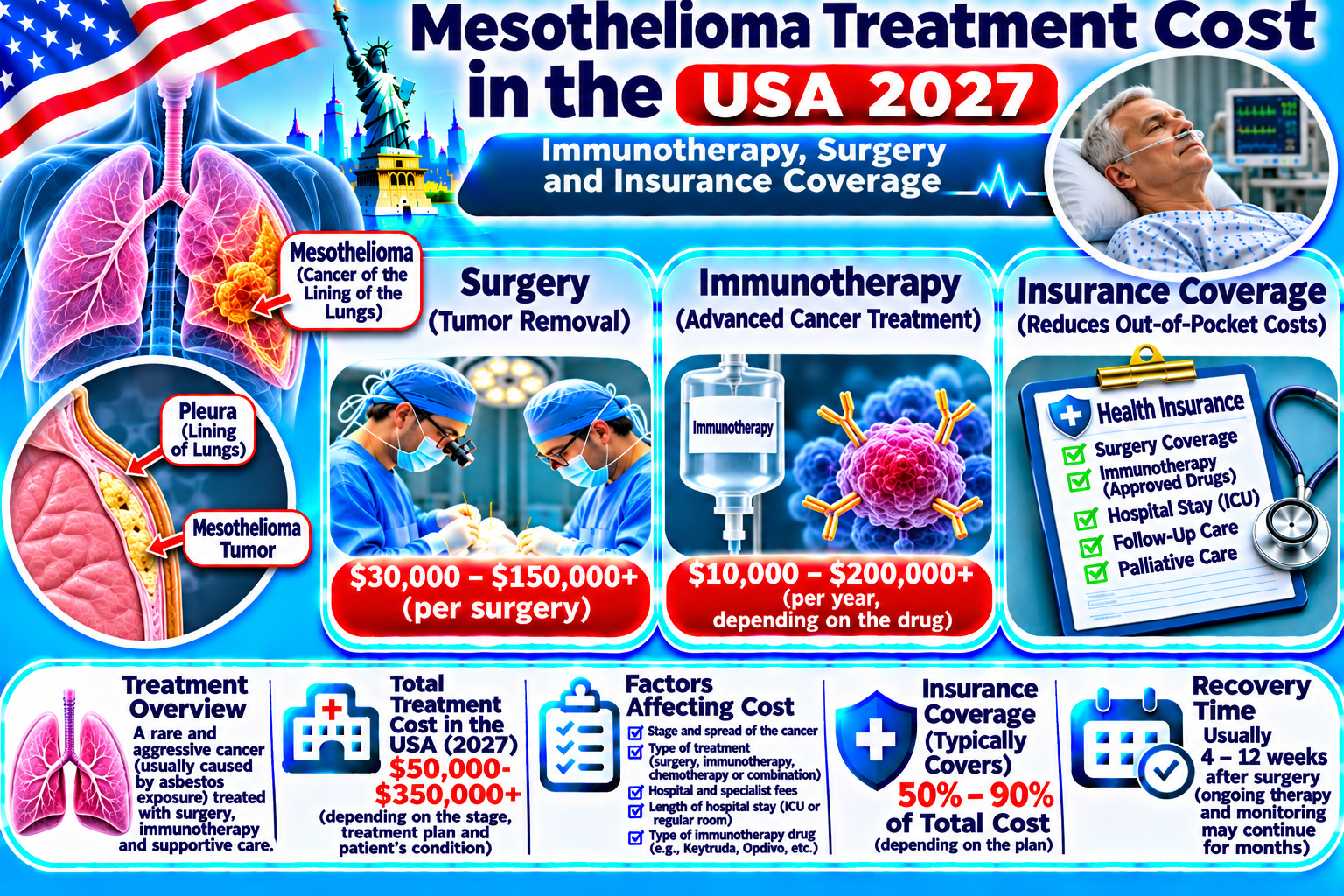
Mesothelioma is a rare and aggressive cancer that develops in the thin tissue lining certain internal organs. Most cases involve the lining surrounding the lungs, known as the pleura. Treatment may include immunotherapy, surgery, chemotherapy, radiation therapy, and supportive medical care.
Understanding mesothelioma treatment costs in the USA in 2027 is important for patients and families comparing immunotherapy drug prices, cancer surgery expenses, oncologist fees, hospital bills, and health insurance coverage.
The total expense depends on the type and stage of mesothelioma, the treatment regimen, hospital location, insurance benefits, and duration of medical care. Some patients require surgery followed by additional therapy, while others receive immunotherapy or chemotherapy without surgery.
This guide explains estimated American mesothelioma treatment expenses for 2027, including diagnosis, immunotherapy, surgery, hospitalization, insurance, and long-term financial planning.
What Is Mesothelioma?
Mesothelioma develops from cells forming the mesothelium, a protective lining around certain organs.
The disease is strongly associated with previous asbestos exposure. Symptoms may develop decades after exposure, making early diagnosis challenging.
Although mesothelioma is uncommon, treatment often requires specialists experienced in thoracic oncology, complex cancer surgery, and advanced systemic therapies.
Types of Mesothelioma
Pleural Mesothelioma
Pleural mesothelioma affects the lining around the lungs and accounts for most diagnosed cases. Symptoms frequently involve chest discomfort and breathing difficulties.
Peritoneal Mesothelioma
Peritoneal mesothelioma develops in the lining of the abdominal cavity. Selected patients may benefit from specialized abdominal surgery combined with heated chemotherapy.
Pericardial Mesothelioma
Pericardial mesothelioma affects the lining surrounding the heart and is extremely rare.
Testicular Mesothelioma
Mesothelioma involving the tunica vaginalis of the testis is also rare and requires individualized specialist management.
Common Symptoms of Mesothelioma
- Persistent chest pain or discomfort.
- Shortness of breath.
- Unexplained weight loss.
- Persistent coughing.
- Fatigue and reduced physical stamina.
- Fluid accumulation around the lungs.
- Abdominal swelling or discomfort.
- Loss of appetite.
These symptoms may occur with many other medical conditions. Persistent or worsening symptoms require professional medical evaluation.
Mesothelioma Risk Factors
Asbestos exposure is the principal established risk factor for malignant mesothelioma.
Exposure may occur through certain historical construction, insulation, shipbuilding, industrial, or occupational activities.
Some people were exposed indirectly through contaminated clothing or environments.
A history of asbestos exposure does not mean that mesothelioma will necessarily develop, but it is important information to share with healthcare professionals.
How Is Mesothelioma Diagnosed?
CT Scan
Chest or abdominal CT imaging helps identify abnormal tissue, fluid accumulation, and possible tumor spread.
PET Scan
PET imaging may help evaluate disease extent and identify areas requiring further assessment.
Biopsy
A tissue biopsy is generally needed to confirm mesothelioma. A pathologist examines the sample and performs appropriate laboratory tests.
Thoracoscopy
Thoracoscopy allows doctors to examine the chest cavity and collect tissue samples through small incisions.
Blood Tests
Blood tests help assess general health and organ function, but they cannot independently establish a mesothelioma diagnosis.
Mesothelioma Treatment Options in the USA
Immunotherapy
Immunotherapy helps the immune system recognize and attack cancer cells. Nivolumab combined with ipilimumab is an established first-line option for appropriate patients with unresectable malignant pleural mesothelioma.
Pembrolizumab combined with pemetrexed and platinum-based chemotherapy is another FDA-approved first-line option for unresectable advanced or metastatic malignant pleural mesothelioma.
These treatments can involve substantial medication and infusion expenses. They may also cause immune-related side effects requiring specialist management.
Chemotherapy
Chemotherapy commonly includes pemetrexed with a platinum-based medication such as cisplatin or carboplatin.
Drug selection and treatment duration depend on the patient’s condition and oncology recommendations.
Pleurectomy and Decortication
Pleurectomy and decortication involves removing cancerous tissue from the lining of the lung and chest while generally preserving the lung itself.
This complex operation is considered only for carefully selected patients.
Extrapleural Pneumonectomy
Extrapleural pneumonectomy removes an affected lung along with selected surrounding tissues.
Because it is an extensive procedure with significant risks, it is reserved for highly selected situations at experienced centers.
Radiation Therapy
Radiation therapy may be used to relieve symptoms or as part of selected treatment plans.
HIPEC for Peritoneal Mesothelioma
Selected patients with peritoneal mesothelioma may undergo cytoreductive surgery followed by heated intraperitoneal chemotherapy, commonly called HIPEC.
Mesothelioma Treatment Cost in the USA in 2027
Mesothelioma treatment costs vary significantly across American cancer centers, hospitals, and insurance companies.
Because mesothelioma is rare, reliable nationwide average prices for individual treatment pathways are limited. Published historical studies demonstrate substantial costs for surgery, chemotherapy, and hospitalization, but those figures should not be mistaken for confirmed 2027 prices.
The following ranges are illustrative budgeting estimates, not verified national averages, insurer payments, or guaranteed hospital quotations.
Estimated USA Cost Breakdown
| Treatment or Service | Estimated Cost (USD) |
|---|---|
| Oncologist Consultation | $200–$700+ |
| CT or MRI Imaging | $800–$4,000+ |
| PET Scan | $2,000–$7,000+ |
| Thoracoscopic Biopsy Episode | $5,000–$25,000+ |
| Chemotherapy Course | $25,000–$100,000+ |
| Immunotherapy Treatment | $10,000–$30,000+ per month, illustrative gross treatment cost |
| Pleurectomy/Decortication Surgical Episode | $50,000–$150,000+ |
| Extrapleural Pneumonectomy Episode | $70,000–$200,000+ |
| Cytoreductive Surgery With HIPEC | $60,000–$180,000+ |
| Radiation Therapy Course | $15,000–$60,000+ |
| Thoracic Surgeon Professional Fee | $4,000–$15,000+ if separately billed |
| Oncology Follow-Up Visit | $150–$500+ |
Important: These ranges are hypothetical planning figures. Surgery episodes may already include surgeon, anesthesia, hospital, and recovery charges. Monthly immunotherapy costs should be multiplied only by the actual treatment duration and should not be confused with the patient’s insurance-adjusted payment.
USA Mesothelioma Treatment Cost Comparison
Because this article focuses on the United States, the following table compares American treatment scenarios rather than different countries.
| USA Treatment Scenario | Illustrative Budget |
|---|---|
| Chemotherapy-Focused Treatment Course | $25,000–$100,000+ |
| Six Months of Immunotherapy | $60,000–$180,000+ |
| Pleural Surgery Episode | $50,000–$200,000+ |
| Complex Multimodal Cancer Care | $150,000–$350,000+ |
These are different treatment scenarios, not fixed packages. Actual costs depend on clinical needs, duration of therapy, and services included.
Immunotherapy Costs for Mesothelioma
Immunotherapy can be one of the most expensive components of mesothelioma treatment. Nivolumab, ipilimumab, and pembrolizumab are specialized medications that may be administered over an extended period.
Costs depend on drug selection, dosing schedules, treatment duration, infusion center fees, and insurance contracts.
Patients may also require laboratory monitoring, imaging, and treatment for immune-related complications.
Before beginning therapy, patients should request an estimate covering both medication charges and administration services.
Mesothelioma Surgery and Hospital Expenses
Major mesothelioma surgery requires experienced thoracic surgeons, specialized anesthesia, and careful postoperative monitoring.
Hospital bills may include operating room services, inpatient accommodation, nursing care, diagnostic testing, medications, and respiratory support.
A historical US study reported an average inpatient cost of approximately $24,901 per mesothelioma hospitalization in 2014. This was an average hospital cost from an earlier period, not a current surgical quotation.
More extensive operations and complications can substantially increase expenses.
Chemotherapy and Radiation Therapy Costs
Chemotherapy expenses depend on the prescribed regimen, number of cycles, infusion services, and supportive medications.
Radiation therapy costs vary according to treatment technique, planning requirements, and number of sessions.
Additional expenses may include anti-nausea medication, laboratory tests, imaging, and management of side effects.
Mesothelioma Treatment With Health Insurance
Many comprehensive American health insurance plans cover medically necessary mesothelioma treatment, including eligible surgery, chemotherapy, immunotherapy, and diagnostic services.
However, coverage depends on the patient’s specific policy and clinical circumstances.
Important insurance considerations include:
- Annual deductible and out-of-pocket maximum.
- Oncologist and hospital network participation.
- Prior authorization for specialty medications.
- Coverage for immunotherapy infusions.
- Inpatient surgery and anesthesia benefits.
- Radiation therapy coverage.
- Prescription medication benefits.
- Follow-up imaging and laboratory testing.
Insurance approval does not necessarily eliminate personal expenses. Patients may still owe deductibles, copayments, and coinsurance.
Medicare Coverage for Mesothelioma
Original Medicare generally covers qualifying medically necessary cancer treatment when applicable requirements are met.
Medicare Part A commonly applies to eligible inpatient hospital services, while Part B covers qualifying physician services and many outpatient cancer treatments.
Medicare Part D may cover eligible outpatient prescription medications.
Medicare Advantage plans may have different network and authorization requirements.
Medicaid and Financial Assistance
Medicaid may cover medically necessary mesothelioma treatment for eligible individuals, depending on state-specific rules.
Some hospitals provide financial assistance programs, and oncology social workers may help patients explore available support.
Patients with documented occupational asbestos exposure may also wish to obtain independent legal advice about potential compensation options. Eligibility is not automatic, and compensation should never be assumed when planning treatment finances.
Mesothelioma Treatment Without Insurance
Uninsured patients may face substantial costs for immunotherapy, surgery, hospitalization, and follow-up care.
Patients should request written estimates and ask whether medication, infusion, hospital, and specialist fees are included.
Financial counselors may help explain payment arrangements and eligibility for assistance programs.
Factors Influencing Mesothelioma Treatment Prices
1. Cancer Type and Stage
Pleural and peritoneal mesothelioma may require different treatment strategies. Advanced disease can involve prolonged systemic therapy.
2. Immunotherapy Selection
Medication combinations, treatment duration, and administration schedules can create substantial cost differences.
3. Surgical Complexity
Major thoracic operations and abdominal cytoreductive procedures require specialized hospital resources.
4. Hospital and Specialist Fees
Operating room charges, physician services, hospitalization length, and supportive care contribute to total spending.
5. Insurance Coverage
Deductibles, negotiated rates, provider networks, and authorization requirements influence patient financial responsibility.
6. Geographic Location
Healthcare prices vary across American states and cities because of regional operating costs and insurance arrangements.
7. Complications and Additional Treatment
Infections, treatment side effects, disease progression, and hospital readmissions can increase expenses.
Recovery and Supportive Care Expenses
Recovery depends on treatment type and overall health. Patients undergoing major surgery may require rehabilitation and respiratory support.
Patients receiving immunotherapy or chemotherapy may need ongoing monitoring for side effects.
Supportive care can include pain management, nutritional counseling, breathing assistance, and treatment of fluid accumulation.
Palliative care can be provided alongside cancer-directed treatment to improve comfort and quality of life.
Long-Term Follow-Up Costs
Mesothelioma patients often require repeated imaging, specialist appointments, laboratory testing, and symptom management.
Some individuals need additional treatment if cancer progresses or returns.
Patients should include transportation, time away from work, and caregiving expenses in their financial plans.
How to Reduce Mesothelioma Treatment Costs
- Verify insurance coverage before planned treatment.
- Request complete written hospital estimates.
- Confirm oncology specialists are in-network.
- Review immunotherapy and chemotherapy benefits.
- Ask about hospital financial assistance.
- Discuss appropriate clinical trial opportunities.
- Explore medication assistance programs.
- Work with an oncology financial navigator.
Frequently Asked Questions
How much does mesothelioma treatment cost in the USA in 2027?
Illustrative treatment expenses may range from approximately $25,000 for selected chemotherapy courses to more than $200,000 for complex care involving surgery and prolonged immunotherapy.
How much does mesothelioma immunotherapy cost?
Illustrative gross treatment costs may reach $10,000 to $30,000 or more per month, depending on medications, dosing, and infusion services.
Does insurance cover mesothelioma treatment?
Many comprehensive insurance plans cover medically necessary treatment, subject to policy requirements and cost-sharing.
Does Medicare cover mesothelioma immunotherapy?
Medicare may cover qualifying medically necessary immunotherapy when applicable coverage criteria are satisfied.
Is surgery recommended for every patient?
No. Surgery is appropriate only for selected patients, depending on cancer extent, overall health, and specialist recommendations.
Can mesothelioma treatment involve multiple therapies?
Yes. Some patients receive combinations of surgery, chemotherapy, immunotherapy, radiation, and supportive care.
Conclusion
Mesothelioma treatment costs in the USA in 2027 depend on immunotherapy, surgery, chemotherapy, hospital expenses, cancer stage, and insurance coverage.
Patients should compare complete treatment estimates, verify insurance benefits, and consult experienced mesothelioma specialists before making medical decisions.
Coordinated oncology care, appropriate treatment selection, and financial planning can help patients manage complex healthcare expenses.
Medical Disclaimer: This article provides general educational and financial planning information only. It does not replace professional medical advice, diagnosis, or treatment. All 2027 cost ranges are illustrative estimates and should be verified directly with hospitals, oncologists, pharmacies, and insurance companies.